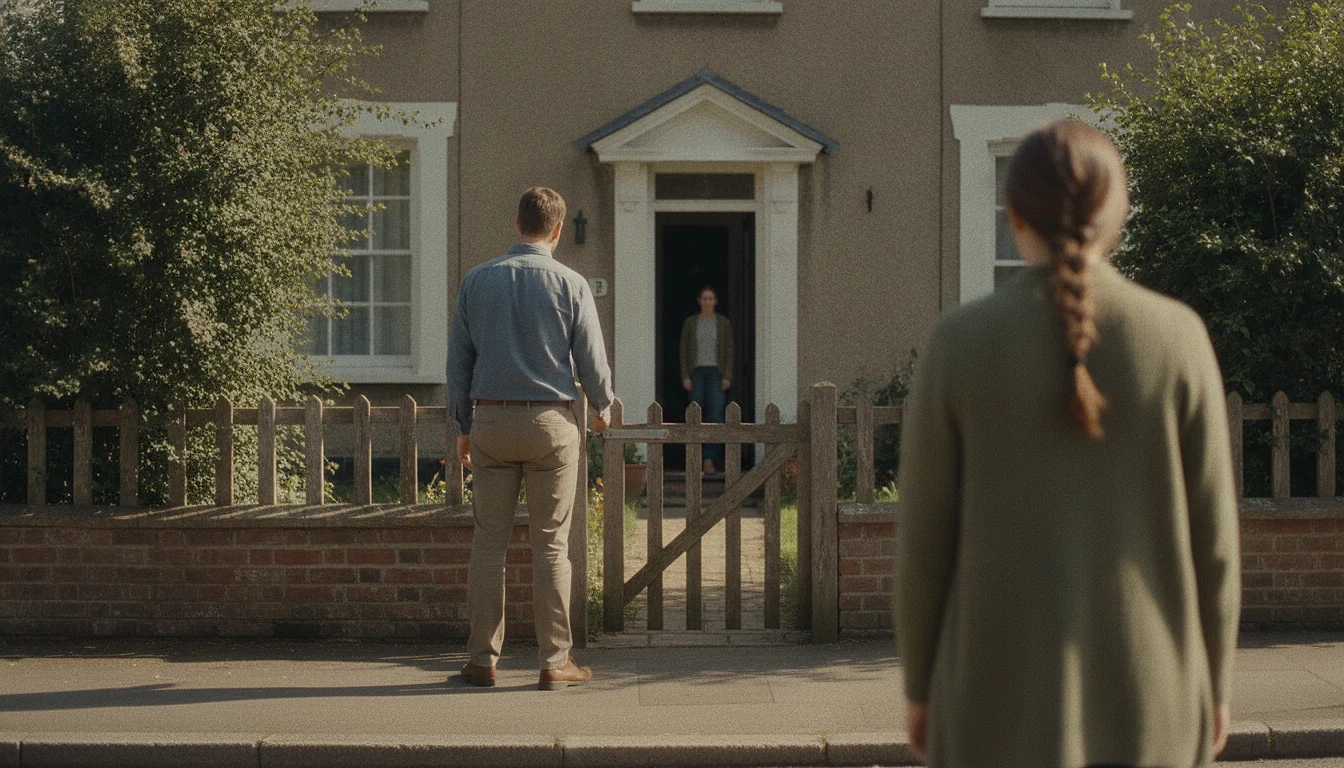
People comparing fearful avoidant vs dismissive avoidant are trying to settle a live question: someone keeps pulling away, and the two labels describe that identically. The pulling away is not where the difference lives. It lives in what happens after — and that is the part this page describes.
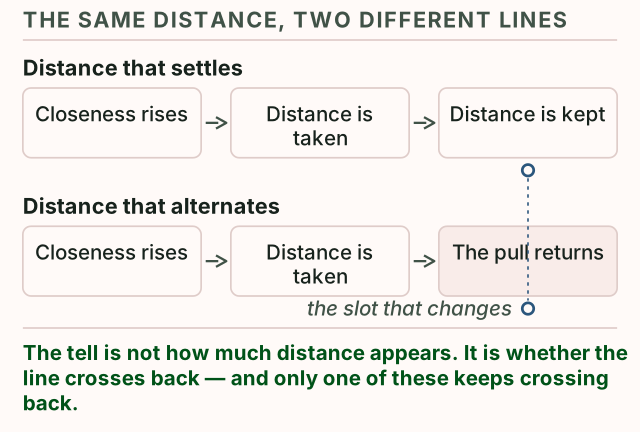
Fearful avoidant vs dismissive avoidant is a comparison of two ways of handling the same discomfort: the dismissive-avoidant pattern moves away from closeness and settles there, while the fearful-avoidant pattern moves away and then back again. Both produce distance; only one keeps crossing it.
The comparison matters because the two patterns respond to the same situations in opposite ways. A message that would land as pressure for one is a lifeline for the other. Reading one pattern as the other leads people to give space where reaching would have been heard, or to reach where space was the only thing that could help.
What is the difference between fearful avoidant and dismissive avoidant?
A dismissive avoidant moves away from closeness. A fearful avoidant moves away from closeness and toward it, in alternation. Both create distance; only one keeps crossing back over it.
Everything else on this page is a longer version of that sentence. The dismissive-avoidant pattern treats distance as the resolved state: once it is established, the discomfort drops and the person settles. The fearful-avoidant pattern gets no resolved state. Distance brings relief and then longing; closeness brings warmth and then alarm. The person is not oscillating because they cannot decide. They are oscillating because both responses fire, and neither one wins for long.
This is why the fearful-avoidant style is also called disorganized: not chaotic, but without a single organised strategy. The dismissive-avoidant style has one strategy and runs it consistently. The fearful-avoidant style runs two contradictory ones, which is what produces the approach–withdraw cycle that partners describe as hot and cold.
Side by side
The table below compares the two patterns at the moments where they are most often confused — after closeness, after conflict, and after a breakup. None of the rows is a test. They describe tendencies people report, and either pattern can produce exceptions on any given week.
| Situation | Dismissive avoidant | Fearful avoidant |
|---|---|---|
| After an unusually close moment | Quiet withdrawal that settles into a new, cooler baseline | Withdrawal, then a return — warmth comes back, often abruptly, sometimes with guilt |
| During conflict | De-escalates and exits; the subject is drained of pressure and not reopened | May exit or may escalate; afterwards, reaches back toward the person the conflict was with |
| When a partner asks for more closeness | Experiences it as pressure and steps back further | Wants to say yes and finds themselves stepping back anyway — then regrets the step |
| After a breakup | Distance holds; relief tends to be the lasting note | Relief first, then the pull toward the person returns while the decision still stands |
| What a return looks like | Slow and practical rather than emotional, when it happens at all | Confusing: a reappearance that still defends the reasons for leaving |
| Their own account of the pattern | "I need space" — the story is consistent with the behaviour | "I don't know why I did that" — the story and the behaviour contradict each other |
The last row is the one people find most useful in practice. The dismissive-avoidant account of their own distance tends to be coherent: space is wanted, space is taken, the story matches. The fearful-avoidant account tends to be split against itself — the person can describe wanting the relationship and describe leaving it in the same conversation, and both descriptions are honest. What that contradiction looks like from inside is covered across what the pattern looks like; this page keeps to the comparison.
Why do the two patterns get confused?
The confusion is structural, not careless. The visible half of the fearful-avoidant pattern is the dismissive-avoidant pattern. When the retreat is running — replies shortening, plans loosening, the person going flat after a close weekend — there is nothing on the surface to distinguish the two. An observer watching only the withdrawal will file both people under the same label, and will be half right.
The difference only becomes visible across time, because it lives in the sequence rather than in any single behaviour. Where to look:
What follows the distance. For the dismissive avoidant, more of the same: the distance is the destination. For the fearful avoidant, a reversal. For example: the message at an odd hour, the sudden warmth, the reappearance that seems to ignore the retreat that preceded it. If the distance keeps being crossed back over, from the same direction it was created, the pattern is not dismissive.
What the closeness looked like before the distance. Dismissive-avoidant closeness tends to be measured on the way in. For example, that looks like information released slowly and plans kept loose from the start. The fearful-avoidant version often arrives fast and fully — intense openness early, the kind that feels like an exception being made — and the retreat is sharp precisely because the approach was unguarded.
How the person talks about wanting. Someone leaning dismissive tends to describe wanting less closeness than partners offer, and the description is stable. Someone in the fearful-avoidant pattern describes wanting closeness clearly, sometimes achingly — and behaves, at intervals, as if they had said the opposite. The mismatch between stated wish and observed behaviour is not deception. It is the pattern.
There is one more source of confusion worth naming: the same person can look like either pattern depending on when you meet them. Consider a fearful avoidant deep in a long retreat: they are behaviourally indistinguishable from a dismissive avoidant, sometimes for a long stretch. People sometimes call this “leaning dismissive”. The lean does not change the underlying alternation; it changes how long you have to watch before you see it.
Is fearful avoidant the same as disorganized?
Yes. Fearful-avoidant attachment and disorganized attachment are two names for one pattern, not two patterns. “Disorganized” is the older term from the research classification of attachment, and the history of that classification has been documented in its own right. “Fearful-avoidant” is the description used for the same pattern in adults, from the four-category model of adult attachment. Some writing uses “anxious-avoidant” for the same thing, which adds to the muddle but does not add a third style.
So a comparison of “fearful avoidant vs disorganized” is a comparison of a pattern with itself, and any page offering to distinguish them is distinguishing vocabularies, not people. The comparison that does contain a real difference is the one this page is about: the fearful-avoidant/disorganized pattern on one side, the dismissive-avoidant pattern on the other. The names, where each comes from, and what they do and do not imply are covered on the style page.
Neither name is a diagnosis. Both describe a way closeness tends to be handled, drawn from what people report about their relationships — not a condition a person has.
What happens when a fearful avoidant and a dismissive avoidant are together?
The pairing exists, and it has a recognisable shape. This page describes it from the fearful-avoidant side, because that is the side this site covers.
For long stretches, the pairing can feel unusually easy. Neither partner presses for more closeness than the other offers. The dismissive-avoidant partner’s steady distance does not trigger the fearful-avoidant partner’s alarm the way eager pursuit would — nothing is closing in. From the fearful-avoidant side, the early phase can feel like the first relationship that does not set off the cycle, because the thing that sets it off, accelerating closeness, is not happening.
The strain arrives from the other half of the pattern. The fearful-avoidant wish for closeness does not stay switched off; it returns, and when it does, it meets a partner whose position does not move. The reach gets a calm, contained response — not rejection exactly, but not the answer the reach was looking for. From the fearful-avoidant side this tends to register as confirmation of the old expectation that wanting more is unsafe, and the pattern’s usual answer follows: retreat, this time with the relief of returning to the distance both partners tolerate well.
What this produces over time is a relationship that is stable in a way neither person chose: long, workable, and running on the smaller of the two appetites for closeness. The fearful-avoidant partner cycles inside it — reaching, meeting stillness, retreating — while the surface stays quiet. Partners in this pairing often describe it as calm from the outside and lonely from one side of the inside. How the reaching half of the cycle behaves inside a relationship generally — what it asks for, and what it does when the asking feels dangerous — is described across in relationships.
Whether the pairing can work is not a question the labels can answer. What the labels can do is predict where the strain will concentrate: at the moments when the fearful-avoidant pull toward closeness switches on. Couples who manage the pairing tend to be the ones who can name that moment while it is happening, rather than argue about the behaviour it produces.
What this comparison doesn't do
- Rank the two patterns
- Neither style is the worse one, the more damaged one, or the harder one to love. Ranking attachment patterns is a habit of the genre, and it produces shame, not accuracy.
- Diagnose anyone
- These are descriptions of how closeness tends to be handled, drawn from what people report. Recognising a pattern in yourself or a partner is not a clinical finding, and this page is not a substitute for one.
- Describe the dismissive-avoidant pattern from the inside
- This site covers the fearful-avoidant pattern. The dismissive-avoidant column above is there for contrast — what it feels like from within that pattern is not ours to describe.
- Tell you which one your partner is
- The honest answer to "which one are they" is: watch the sequence over time. A single withdrawn month cannot distinguish the patterns, and a page cannot either.
Where to go from here
If the alternation described here is the familiar part — the reaching back, not just the pulling away — the pattern this site covers is probably the relevant one. The mechanics of the retreat itself, including why it so often follows the best moments rather than the worst, are taken apart in deactivating. What the pattern looks like across a relationship’s ordinary moments is in signs.
What we send
Two avoidances, one letter apart
That did not go through. Nothing was saved and nothing was sent — try the address again, or write to us directly and we will add it by hand.
- It never tells you what you are, or what anybody else is.
- It carries no figures, because this guide publishes none.
- It arrives when a page changes, and stays quiet when none does.
No schedule, no sequence, no course. One link in every letter takes you off the list for good.