
People arrive at this term from different doors. A quiz result, a partner’s late-night explanation, a phrase in a comment thread: disorganized attachment style, fearful-avoidant, anxious-avoidant, sometimes all three in one paragraph. The vocabulary looks like a taxonomy of separate problems. It is closer to one pattern wearing several labels, and this page exists to sort the labels out.
This is the entry page for the section: the definition, the naming, what the term does not cover, and a map of where each part of the pattern is described in detail.
What is disorganized attachment?
Disorganized attachment style is an adult pattern in which the system that seeks closeness and the system that defends against it are active at the same time. The person wants the relationship and braces against it, moves toward a partner and then away, without a conflict in between that would explain the switch. It is a description of behaviour in close relationships, not a diagnosis, and it says nothing about the rest of who someone is.
The word “disorganized” misleads if read as a comment on the person. It does not mean chaotic, careless or unstable as a character verdict. It marks the absence of one settled strategy for handling closeness. In the language of attachment theory, an anxiously attached person mainly moves toward; an avoidantly attached person mainly moves away. The pattern described here does both — in alternation across a week, or genuinely at once, in the same conversation.
From the outside that reads as contradiction. For example: warmth that turns into a wall, a person who asks for reassurance and then goes quiet when it arrives, closeness that grows right up to the point where it becomes real and then reverses. From the inside it can feel less like a choice than like two alarms wired to the same doorbell. Both readings are described across this site through one mechanism, the reach-out, push-away cycle.
Two scope notes before the naming. First, this site describes the pattern in adult relationships only. Second, a pattern is not a totality. In practice, the same person can hold it with a partner and show none of it with friends, colleagues or their own children.
Why does one pattern have several names?
The short answer is that different research traditions arrived at the same territory from different directions, and the internet then blended their vocabularies.
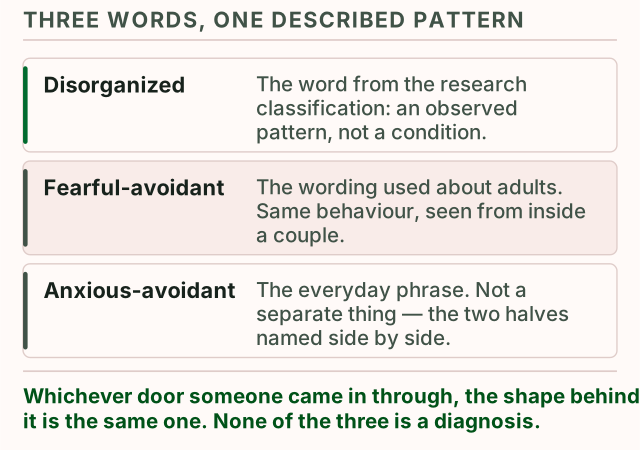
“Disorganized” is the term from the research classification of attachment, set out in the volume where the disorganized category was described. Within that tradition the word contrasts with “organized”: the other insecure patterns are consistent strategies, while this one is defined by the lack of a single strategy. The term travelled into everyday writing carrying its technical sound with it, which is part of why it alarms people who meet it in a quiz result.
“Fearful-avoidant” is the name used in a four-category model of adult attachment that describes adult relating along two dimensions: how anxious someone is about being left, and how much they avoid depending on another person. Fearful-avoidant names the corner where both run high. Because that frame was built for adult relationships, this is the label you will meet in writing about dating, couples and breakups — and the one used across this guide.
“Anxious-avoidant” is mainly an everyday compound: readers bolt the two halves of the pattern together and the result points at the same both-at-once experience. One caution belongs here: the same words have carried other meanings in older research writing, which is part of why the vocabulary confuses people. When in doubt, ask what behaviour a writer is pointing at rather than which label they chose.
| Name | Where it comes from | How it is used |
|---|---|---|
| Disorganized attachment | The research classification of attachment | The formal term; what psychology writing tends to use |
| Fearful-avoidant attachment | The two-dimension description of adult attachment | The adult-relationships label; the default across this guide |
| Anxious-avoidant attachment | Everyday usage joining the two halves of the pattern | Informal; points at the same both-at-once pattern |
| Fearful-avoidant / disorganized | Writers bridging both traditions | A signal that the two labels name one pattern |
The table is the whole story: these are names, not stages, and not degrees of how bad it is. For example, a person described as fearful-avoidant in a relationships article and a person described as having disorganized attachment in a psychology explainer are being described with the same idea.
What is it not?
Because “disorganized” sounds clinical, this section is the most important one on the page.
It is not a diagnosis. No clinician assesses you and hands back a disorganized attachment style as a finding. Attachment language is a descriptive frame from research, and a description can fit closely while establishing nothing about anyone’s mental health. Those are separate questions, answered by different people.
It is not a disorder or an illness. The pattern describes how closeness gets handled under pressure. It can coexist with excellent health, and difficulty in relationships can have nothing to do with attachment at all. This page cannot tell those situations apart, and it does not try — see the final section.
It is not the “worst” attachment style. That framing circulates online and this guide declines it. Ranking styles is a judgement dressed as a fact; there is no descriptive answer to which pattern is worst, only different shapes of difficulty, each hard from the inside.
It is not a summary of the person. The label covers one region of behaviour, the region around closeness. Loyalty, humour, competence, depth of feeling — none of that is inside the term.
It is not general avoidance. The dismissive-avoidant pattern manages closeness by settled distance; the fearful-avoidant pattern wants the closeness it defends against. The two get merged online, and the differences are practical, not academic — the comparison page takes them apart.
How does the pattern show up?
This hub holds the descriptive work, one page per question people actually bring:
- The signs. What the pattern looks like in behaviour — in closeness, in conflict, in the gap between how someone acts early on and later. Written as description to recognise, not a checklist to score.
- Fearful-avoidant vs dismissive-avoidant. The comparison people need once they realise “avoidant” covers two different mechanics: where the two patterns overlap, where they split, and why the difference matters in a relationship.
- “Quiet” and “loud” readings. Search vocabulary treats these as sub-types. They are better read as volumes: how visible the same pattern is from the outside. That page explains what people mean by the labels and what they actually map to.
- Men and women. What people are asking when they search for the pattern by gender, and how the same mechanism gets read differently depending on who is running it.
- Where it comes from. The one page here about origins, written in the language of the literature and honest about where description has to stop.
The mechanism underneath every page above — the cycle of reaching out and pushing away — has its own section of the guide, because it, not any list of traits, is what defines the pattern.
What this guide does not do
The attachment-content category has habits this site was built to avoid.
- Diagnose
- No page here can tell you what you or a specific person has. We describe a pattern; whether it applies, and what else might be going on, is not knowable from an article.
- Rank the styles
- "Which attachment style is worst" is a judgement frame, not a question with a descriptive answer. We decline it everywhere it appears, including in our own FAQs.
- Quote numbers we cannot stand behind
- No percentages, no timelines, no "most people". Where we have no vetted source, we say so instead of borrowing a figure that sounds authoritative.
- Sell a protocol
- No steps that promise to change a partner, and no program that promises to change you by a deadline. Description of what change looks like lives in the healing section, without guarantees.
Where this page stops
This page can describe a pattern precisely, and that is all it can do. It cannot tell you whether what you recognise in yourself or in someone else is this pattern, something else entirely, or a sign of a condition that deserves proper attention — a description on a website cannot make that distinction, and an attachment style is not a diagnosis that could settle it. If any of what brought you here comes with real distress, the useful next step is a conversation with a therapist or a physician, who can ask the questions a page cannot. How this site checks its own descriptions, and what literature sits behind them, is laid out on the sources page.